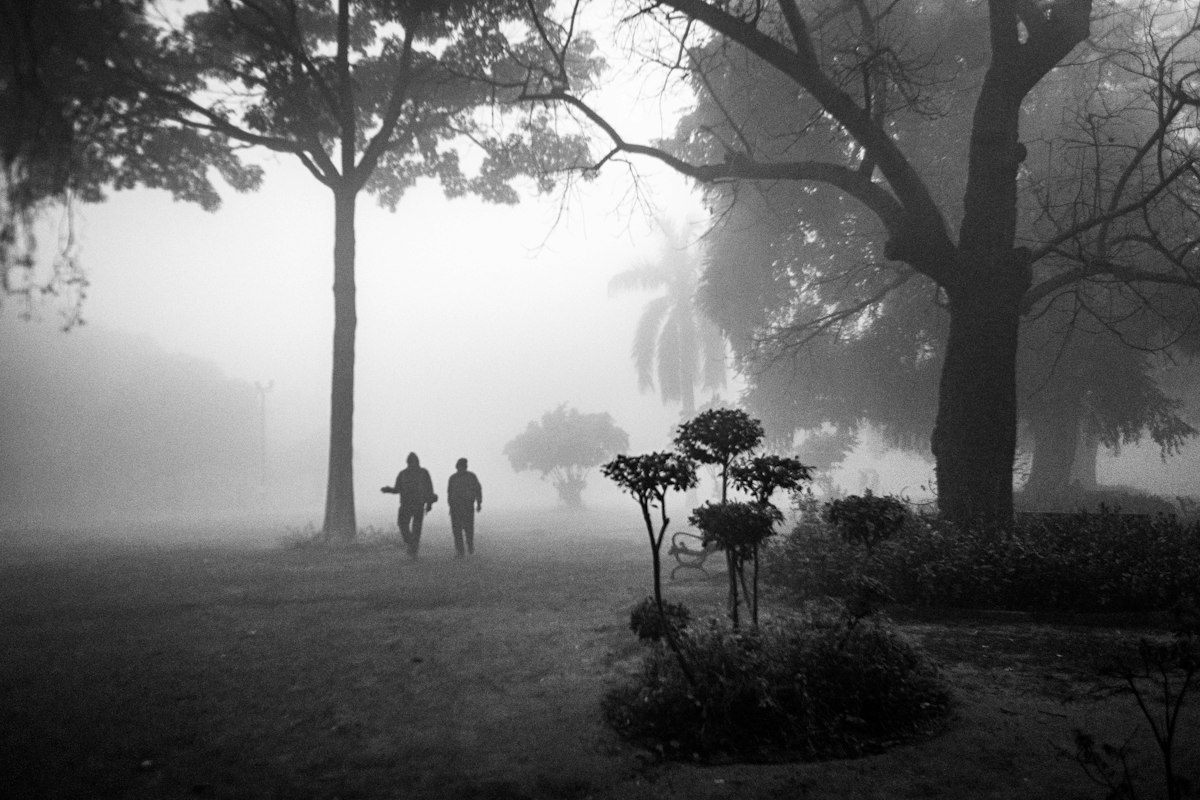
It's 7:40 on a December morning in Kamla Nagar. You have a 9 am paper at Hindu, the window shows a flat grey sky where the Ridge should be, your phone says the AQI is in the 300s, and the geyser is the only thing in the building you trust. If this is your first Delhi winter, nobody really warns you that the season comes in two parts: first the smog, then the cold, with exams sitting right in the middle of both.
This guide is for students living in PGs around North Campus who want to get through November to January without falling sick, losing study days or spending a fortune.
The quick answer
Treat November as smog season and late December to January as cold season. Keep an N95 mask in your bag and check the AQI before stepping out. Layer your clothes instead of buying one heavy jacket. Plan your study hours around daylight and the DU exam calendar. And pick a room where hot water, power back-up and proper meals are already sorted, so the weather doesn't decide your day.
What a North Campus winter actually looks like
Delhi's air usually turns bad from late October, and this year followed the pattern closely. GRAP Stage I came into force on 21 October 2026, Stage II on 2 November when the city's AQI crossed 300, and Stage III on 6 November with the daily average at 382. On 9 November the city touched 391, the highest of the season so far, according to CPCB data reported in the news.
The cold arrives a little later. A normal January morning in Delhi sits somewhere around 7 to 9°C, but cold spells push it lower: Safdarjung recorded 4.2°C on 10 January 2026, the coldest morning of last winter. Add dense fog on some days and you get slow mornings, delayed trains for anyone going home, and a strong temptation to stay under the blanket.
| Period | What to expect | What it means for you |
|---|---|---|
| Late Oct to Nov | Smog builds up, GRAP stages tighten | Masks outdoors, fewer evening walks, more indoor study |
| 20 Nov onwards | DU preparation leave and practicals | Your routine is now yours to build |
| From 4 Dec | DU odd-semester theory exams | Early mornings in cold, foggy weather |
| 25 to 31 Dec | DU winter break | Travel home is busy and fog can delay trains |
| January | Coldest mornings, even semester starts 1 Jan 2027 | Layering, hot water and good sleep matter most |
DU dates are from the university's 2026–27 academic calendar. Always confirm your own paper dates on the date sheet.
Smog season: reading the AQI without panicking
The number on your phone follows CPCB's scale: 0–50 is good, 51–100 satisfactory, 101–200 moderate, 201–300 poor, 301–400 very poor and 401–500 severe. Most November days in North Campus will sit in the poor to very poor range, with some severe days in between.
Simple habits that actually help
- Wear a proper N95 outdoors. Cloth and surgical masks do very little against fine particles. One well-fitting N95 that you replace regularly beats five loose ones.
- Move exercise indoors on bad days. The early-morning run around the Ridge feels great, but on a 350+ AQI day you're pulling smoke deep into your lungs. Stretch, skip or use an indoor space instead.
- Keep windows shut on the worst days and air the room for a few minutes in the afternoon, when the air is usually a little better than at night and early morning.
- Drink water even when you don't feel thirsty. Winter dryness plus smog is a reliable recipe for a sore throat.
- Talk to a doctor early if you have asthma or allergies. Don't wait for exam week to find out your inhaler is empty.
Under GRAP Stage III, schools in Delhi-NCR move younger classes to hybrid mode, but colleges usually keep running normally, so plan as if you'll be travelling to campus every day.
Dressing for Delhi cold without overspending
Students from the South and North-East often buy one huge jacket in the first week of December and then sweat in it at 2 pm when the sun comes out. Delhi winters swing a lot between morning and afternoon, so layers work far better.
The four layers that cover most days
- Thermal inner for the coldest mornings and late nights.
- A regular T-shirt or shirt on top.
- A sweater or hoodie you can take off in a warm classroom.
- A windproof jacket for early papers, late returns and two-wheeler rides.
Add woollen socks, a cap and a muffler, and you're set for most of January. Kamla Nagar market is right next door for winter basics, so there's no need to haul everything from home. Buy the thermals first; they make the biggest difference for the least money.
Your room in winter: what to check before the cold hits
A PG that felt perfect in August can feel very different in January. Before December, check a few things.
- Hot water: is there a geyser in your washroom, or a shared one with a queue at 8 am?
- Power back-up: fog and peak load can mean cuts. If your study lamp and Wi-Fi die mid-revision, you lose more than an hour.
- Bedding: ask whether a heavier blanket or quilt is provided, or whether you need your own.
- Windows and gaps: a draughty window over your bed will cost you sleep. Ask for it to be fixed now, not in January.
- Heaters: many PGs restrict personal room heaters for safety and power reasons. Check the rules before you buy one.
At Ashray Living, for example, every room has an attached washroom with a geyser and AC with 24×7 power back-up, which takes two of the biggest winter headaches off the list.
Eating right when it's cold outside
Winter is when the instant-noodle habit quietly takes over. It's cold, the mess feels far away, and Maggi is right there. Two weeks of that during exams and you'll feel it in your energy and your immunity.
- Don't skip breakfast before a morning paper. A warm breakfast does more for your concentration than a third cup of coffee.
- Eat seasonal food: winter in North India means carrots, peas, methi, sarson, oranges and guava, all cheap and everywhere.
- Keep a few healthy snacks in your room for late-night revision: roasted chana, peanuts, fruit.
- Watch the chai count. Five cups a day plus late nights is a fast route to acidity and broken sleep.
If your PG serves fixed meals, use them. Four proper meals a day, including an evening snack, makes the late-night junk run much less tempting. For more ideas, see our piece on why healthy food matters in a PG.
Studying through preparation leave and exams
From 20 November the classes stop and your day has no outside structure. Smog and cold make it very easy to sleep in until 11 and study until 3 am. That pattern catches up with you when your first paper is at 9:30 am on a foggy 4 December.
A routine that survives winter
- Fix your wake-up time to your exam time at least a week before the first paper.
- Use daylight for the hardest subject. Your brain is sharper and the room is warmer between 10 am and 4 pm.
- Study at a desk, not in bed. The blanket wins every argument after 20 minutes.
- Plan your route to the exam centre. Fog mornings are slow; leave 15 minutes earlier than you think you need.
- Take short breaks indoors when the AQI is bad, instead of the usual walk to Hudson Lane.
Our guide on balancing study and personal life in a PG has more on building a routine that sticks.
Staying well: small things that prevent big problems
Most winter illnesses in a PG spread the same way: shared spaces, dry air, poor sleep and skipped meals.
- Wash your hands before meals, especially after the metro.
- Keep a basic kit: thermometer, ORS, your usual medicines, and a few masks.
- Sleep seven hours on most nights during preparation leave. All-nighters before a winter exam often end in a fever.
- If a roommate is unwell, open the window for a few minutes when the air allows, and don't share bottles or towels.
- Get sunlight when you can. A 20-minute walk on a clear afternoon does a lot for your mood in a grey month.
We've collected more everyday tips in PG health hacks.
Common mistakes first-year students make in a Delhi winter
- Waiting for "real" cold to buy warm clothes. By then everyone is shopping on the same weekend.
- Booking train tickets home late. The 25–31 December break is popular, and fog can delay trains by hours. Book early and keep buffer time.
- Ignoring the AQI on exam weeks. A sore throat in the middle of papers is avoidable.
- Running a heater all night with the door shut. It dries the air, can be unsafe, and is often against PG rules.
- Living on chai and biscuits during preparation leave. Energy crashes at 4 pm are not a personality trait.
The wrap-up
A Delhi winter isn't hard if you prepare a little in November. Sort your clothes and mask, fix your sleep before exams, eat proper meals, and make sure your room has reliable hot water and power. Then the season becomes what it should be: chai on a sunny terrace after your last paper, and winter evenings in Kamla Nagar market with friends.
If you're still choosing a place to stay near campus, a PG that already handles the basics makes these months much easier. You can see what that looks like at Ashray Living's residences in Kamla Nagar.
FAQ
When is the smog worst in Delhi?
Usually from late October through November, with bad spells continuing into December and January. In 2026, GRAP Stage II started on 2 November and Stage III on 6 November.
When do DU odd-semester exams start in 2026?
According to DU's 2026–27 academic calendar, preparation leave and practicals start on 20 November 2026 and theory exams begin on 4 December 2026. Check your own college's date sheet for your paper dates.
How cold does Delhi get in January?
Typical January mornings are around 7 to 9°C, but cold spells can bring them down to about 3 to 4°C. Afternoons are often much warmer, which is why layers work better than one heavy jacket.
Do I need an N95 mask in North Campus?
On poor, very poor and severe AQI days, an N95 is the practical choice for outdoor time. Cloth and surgical masks don't filter fine particles well.
Can I use a room heater in a PG?
It depends on the PG. Many limit personal heaters for safety and power-load reasons, so ask before buying one.